
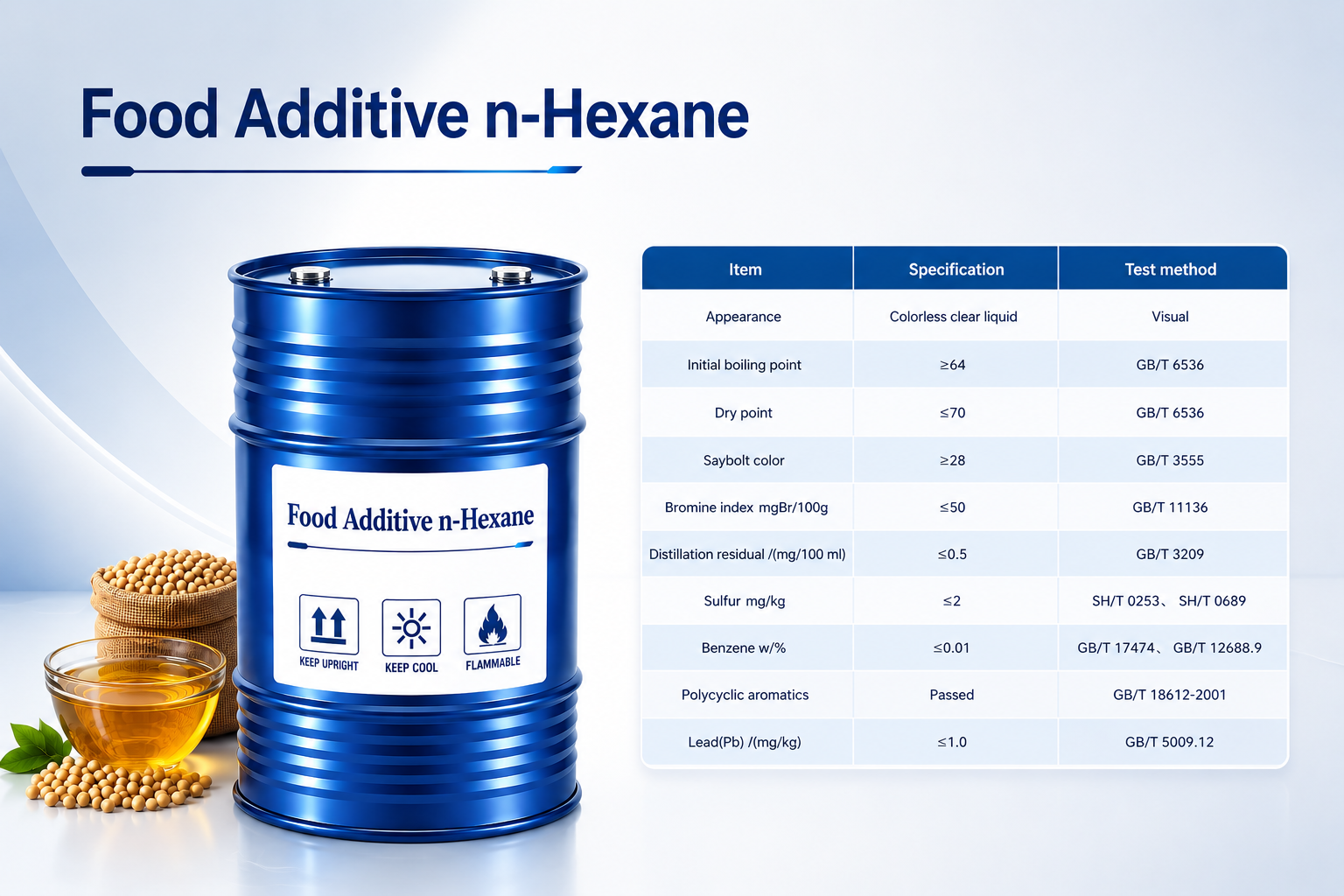
Food Additive n-Hexane Product Specifications
Application Areas
Vegetable Oil Extraction
Primarily used as a specialized extraction solvent for the production of vegetable and edible oils. It is suitable for extracting oil from soybeans, rice bran, cottonseed, spices, and other oil-bearing materials, supporting efficient oil recovery and consistent processing performance.
Edible Oil Production
Widely used in solvent-based edible oil extraction processes to separate and recover oil from oil-rich raw materials. Its high purity and controlled specifications support efficient industrial oil production.
Oilseed Processing
Suitable for the extraction of oils from various oilseeds and agricultural materials, including soybeans, cottonseed, rice bran, and other oil-bearing crops. It helps improve extraction efficiency and maximize oil recovery.
Food-Grade Extraction
Designed for applicable food-processing extraction applications where a high-purity n-hexane solvent is required. Controlled levels of benzene, sulfur, residue, and other impurities help support relevant food-grade processing requirements.
Natural Product Extraction
Can be used in applicable extraction processes involving oil-rich natural materials and plant-based raw materials, supporting the efficient recovery of target oils and soluble components.
Packaging and Logistics
- 200L Steel Drum
- ISO Tank
- Bulk Shipment
- Export Standard Packaging
- Worldwide Ocean Freight
FAQ
What is n-hexane used for?
n-Hexane is commonly used as an extraction solvent for edible vegetable oils, and can also be used to clean precision electronic and hardware components, as well as to formulate glues and inks. In the laboratory, it serves as a chromatographic elution reagent, and is also used in the synthesis of chemical raw materials and the extraction of active ingredients from Chinese herbal medicines. With its fast volatilization and strong oil-dissolving ability, its applications cover multiple industries including grain and oil, electronics, chemicals, and testing.
Is n-hexane dangerous?
n-Hexane is a highly hazardous chemical with an extremely low flash point, making it highly prone to catching fire and exploding. Long-term inhalation of its vapors can cause irreversible peripheral nerve damage, leading to numbness and weakness in the hands and feet; short-term high-concentration inhalation can cause dizziness and coma, and direct contact can damage the skin and eyes. Storage and use require continuous ventilation and proper protection, and waste liquid must be uniformly handled as hazardous waste.
What is a CAS number?
A CAS number is a unique three-part numeric identifier. Issued by the American Chemical Society's Chemical Abstracts Service, every single chemical has only one unique CAS number, unaffected by substance aliases. It is a mandatory identifier for chemical procurement, MSDS preparation, hazardous chemical warehouse filing, transportation customs declaration, and laboratory reagent registration.
Can you export to my country?
n-Hexane is a hazardous chemical (flammable liquid, UN 1208). Different countries have different import access policies for hazardous chemicals, and some countries may restrict the import of specific chemicals.