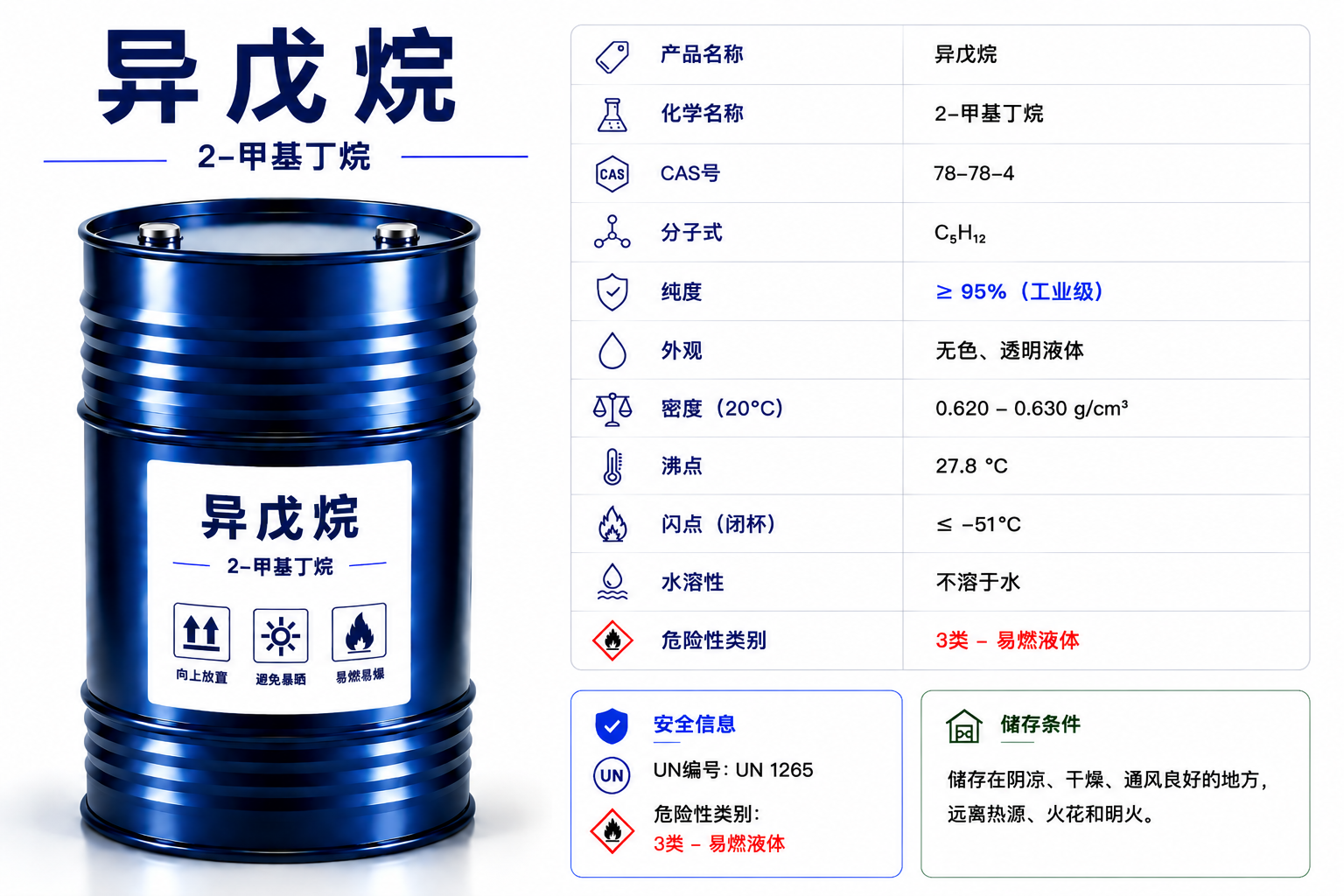
异戊烷 95% Product Specifications
Application Areas
聚氨酯发泡
作为碳氢类发泡剂组分,用于聚氨酯硬泡和保温材料生产。
制冷保温材料
用于冰箱、冷柜及冷库保温泡沫制造。
溶剂应用
作为工业溶剂,用于化学合成、实验分析及相关工艺。
化学合成
用作有机合成过程中的中间体及反应介质。
实验与研发
用于实验室研究、分析测试及科研用途。
工业清洗
用于部分工业清洗和精密加工应用。
Packaging and Logistics
- 125 kg桶装
- ISO罐运输
- 支持散装供应
- 支持国际出口
- 符合危险品运输要求
- 适用于工业级化学品包装与运输
File Download
FAQ
What is n-hexane used for?
n-Hexane is commonly used as an extraction solvent for edible vegetable oils, and can also be used to clean precision electronic and hardware components, as well as to formulate glues and inks. In the laboratory, it serves as a chromatographic elution reagent, and is also used in the synthesis of chemical raw materials and the extraction of active ingredients from Chinese herbal medicines. With its fast volatilization and strong oil-dissolving ability, its applications cover multiple industries including grain and oil, electronics, chemicals, and testing.
Is n-hexane dangerous?
n-Hexane is a highly hazardous chemical with an extremely low flash point, making it highly prone to catching fire and exploding. Long-term inhalation of its vapors can cause irreversible peripheral nerve damage, leading to numbness and weakness in the hands and feet; short-term high-concentration inhalation can cause dizziness and coma, and direct contact can damage the skin and eyes. Storage and use require continuous ventilation and proper protection, and waste liquid must be uniformly handled as hazardous waste.
What is a CAS number?
A CAS number is a unique three-part numeric identifier. Issued by the American Chemical Society's Chemical Abstracts Service, every single chemical has only one unique CAS number, unaffected by substance aliases. It is a mandatory identifier for chemical procurement, MSDS preparation, hazardous chemical warehouse filing, transportation customs declaration, and laboratory reagent registration.
Can you export to my country?
n-Hexane is a hazardous chemical (flammable liquid, UN 1208). Different countries have different import access policies for hazardous chemicals, and some countries may restrict the import of specific chemicals.